
Hear from Our Customers
That musty smell in your basement isn’t just unpleasant. It’s a signal. And those dark spots behind the washing machine? They’re not going away on their own.
You need to know what you’re dealing with before you can fix it. Professional mold testing gives you lab-confirmed answers about the type of mold in your home, how much is there, and where the moisture is coming from. No guessing. No home test kits that leave you wondering if the results mean anything.
Bucks County’s humid summers and damp winters create perfect conditions for mold growth. What starts as a small patch can spread through walls, under floors, and into your HVAC system faster than you’d expect. Testing catches it early, when the fix is still manageable and before your family’s breathing problems get worse.
The right test tells you if that discoloration is actually mold or just dirt. It shows whether your air quality is safe or if spores are circulating every time the heat kicks on. And it gives you documentation if you need it for insurance, real estate, or just peace of mind.
We serve homeowners throughout Langhorne and Bucks County with straightforward mold testing and remediation. We’ve seen what happens when mold gets ignored in this area—the leaky basements after spring rains, the condensation problems in older homes, the hidden moisture issues that come with our climate.
Here’s what sets our approach apart: we’ll tell you when you don’t need us. If your issue is something you can handle yourself, we’ll say so. That honesty has saved Langhorne homeowners hundreds of dollars, and it’s why people call us back when they do need professional help.
We use the same testing equipment and lab analysis that larger restoration companies use, but we’re local enough to understand the specific mold challenges Bucks County properties face. Our testing process is thorough, our reports are clear, and our recommendations are based on what’s actually growing in your home—not what we want to sell you.
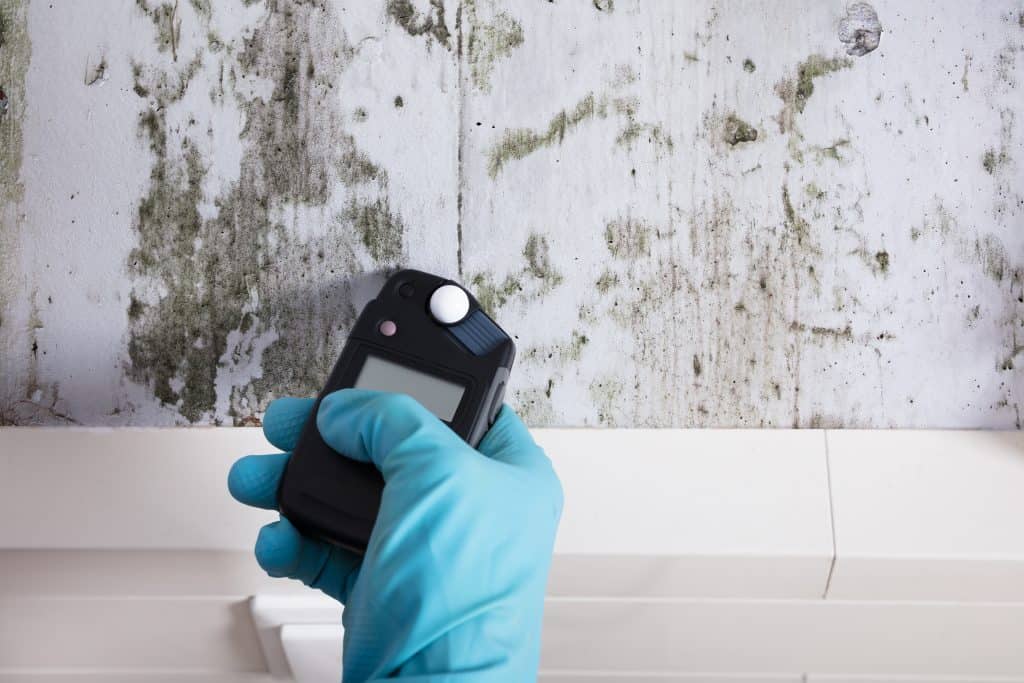
The process starts with a visual inspection of your property. We’re looking for visible mold, water damage, moisture problems, and areas where mold typically hides. We use moisture meters to find dampness you can’t see and infrared cameras to detect temperature differences that signal hidden issues.
Next comes sample collection. We take air samples to measure spore counts in different rooms and compare them to outdoor levels. Surface samples come from any visible growth or suspicious areas. The goal is to identify what types of mold are present and how concentrated they are.
Your samples go to a third-party lab overnight. They analyze everything and send back detailed results showing mold types, spore counts, and concentration levels. This lab analysis is what separates professional mold testing from those home test kits—you get actual data, not just a color change on a strip.
Once results come back, we walk you through what they mean. If there’s a problem, we explain what needs to happen and give you a written quote for remediation. If levels are normal, we tell you that too. The entire process typically takes three to five days from inspection to final report.
Ready to get started?
Your mold testing service includes a full property inspection with professional detection equipment. We check basements, crawl spaces, attics, bathrooms, and any other areas where Langhorne homes commonly develop mold problems. Moisture meters and infrared cameras help us find issues that aren’t visible yet.
Air quality testing measures spore counts throughout your home. We compare indoor levels to outdoor baseline samples to determine if you have an elevated mold problem. Surface testing collects samples from visible growth or suspicious areas to identify specific mold types. Black mold, for example, requires different handling than common household molds.
Lab analysis provides the scientific backing for our findings. You receive a written report with all test results, mold types identified, concentration levels, and our professional assessment. If remediation is needed, the report includes a detailed quote and recommended action plan.
The testing also identifies moisture sources—leaking pipes, foundation cracks, poor ventilation, or condensation issues. Knowing where the water is coming from is just as important as finding the mold, because you can’t solve the problem permanently without addressing the source. In Bucks County, that often means dealing with basement seepage, roof leaks, or humidity control issues specific to our climate.
Professional mold testing in Langhorne typically runs between $300 and $1,000 depending on your home’s size and how many samples we need to collect. Most residential properties fall in the $600-$700 range for comprehensive testing.
That price includes the inspection, sample collection, lab analysis, and a detailed written report. You’re not just paying for someone to look around—you’re getting laboratory-confirmed data about what’s actually growing in your home and how much of it is there.
The cost makes sense when you consider what you’re avoiding. Treating the wrong type of mold, missing hidden growth, or trying to remediate without knowing the moisture source usually costs more in the long run. Testing first means you fix the right problem the right way, which saves money compared to guessing or doing the work twice.
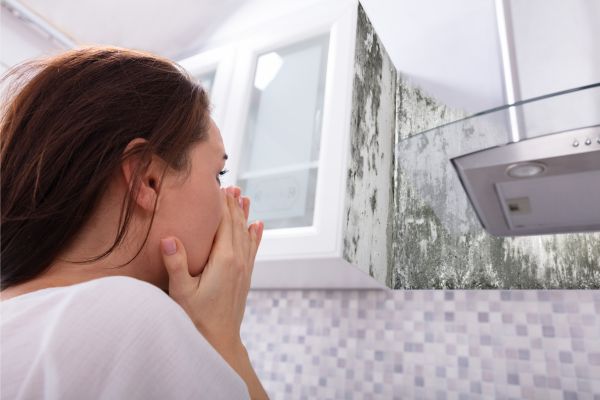
Persistent musty odors are the biggest red flag, especially if you can’t find the source. That smell means mold is growing somewhere, even if you can’t see it yet. It’s often hidden behind walls, under carpets, or in ventilation systems.
Visible discoloration on walls, ceilings, or around windows is another clear sign. So are water stains, even old ones—mold can stay dormant and start growing again when conditions are right. If anyone in your household is experiencing unexplained allergies, respiratory issues, or sinus problems that get better when they leave the house, that’s worth investigating.
Recent water damage is a definite trigger for testing. Whether it’s a burst pipe, roof leak, or basement flooding, mold can start growing within 24-48 hours. You might not see it yet, but testing shows whether spores are already spreading. Same goes if you’re buying or selling a home in Langhorne—testing before the transaction prevents surprises that can derail the deal.
Home test kits can’t tell you what type of mold you have or how much is actually there. They typically just confirm that mold exists, which isn’t particularly useful since mold spores are present in virtually every home. The question isn’t whether mold exists—it’s whether you have a problem that needs fixing.
Professional testing uses calibrated equipment to collect precise air and surface samples. Those samples go to an accredited laboratory where technicians identify specific mold species and measure concentration levels. The lab results show whether your spore counts are elevated compared to normal outdoor levels, which is how you determine if you actually have a mold problem or just normal background levels.
The other major difference is moisture detection. We use professional-grade meters and infrared cameras to find hidden dampness and water intrusion. That tells you where the mold is coming from, not just where it’s growing. You can’t fix a mold problem permanently without addressing the moisture source, and home test kits don’t help with that at all.
The on-site inspection and sample collection usually takes one to two hours depending on your home’s size and how many areas we’re testing. We’re thorough but efficient—checking all the common problem spots plus anywhere you’ve noticed issues.
Lab analysis takes 24-48 hours once samples arrive. We send everything overnight to ensure fast turnaround. Most homeowners have their full results within three to five days from the initial inspection.
If we find a problem, we can typically start remediation within a few days of delivering your results. If levels are normal, you have your answer just as quickly. The timeline matters because mold doesn’t stop spreading while you’re waiting for answers. Our process is designed to give you accurate information fast so you can make decisions and take action without unnecessary delays.
Yes, lab analysis identifies specific mold species, including Stachybotrys chartarum—the mold commonly called black mold. Surface samples from any visible growth get analyzed to determine exactly what type of mold you’re dealing with.
That said, “black mold” isn’t always black in color, and not all black-colored mold is Stachybotrys. That’s why testing matters. Visual identification isn’t reliable. You need laboratory confirmation to know whether you’re dealing with toxic black mold or one of the many other mold types that can grow in homes.
If testing does confirm black mold, the report will specify concentration levels and affected areas. Black mold requires careful remediation because it produces mycotoxins that can cause serious health effects. Knowing for certain what you have means we can use the right safety protocols and removal methods. Guessing or assuming based on color alone isn’t worth the risk to your family’s health.
Yes, especially if the water wasn’t cleaned up within 24-48 hours. Mold can start growing that quickly in damp conditions, and Bucks County’s humidity makes the problem worse. Even if everything looks dry on the surface, moisture can be trapped in walls, under flooring, or in insulation where you can’t see it.
Testing after water damage shows whether mold has already started growing and how widespread the problem is. Air samples detect elevated spore counts even before you see visible growth. That early detection is critical—catching mold in the first few days or weeks is much easier and less expensive to remediate than waiting until it’s spread throughout multiple rooms.
The testing also documents the extent of damage for insurance purposes. If you’re filing a claim, having professional test results and a detailed report strengthens your case. It shows exactly what happened, what needs to be fixed, and provides the documentation insurance companies typically require for mold-related claims.
Other Services we provide in Langhorne